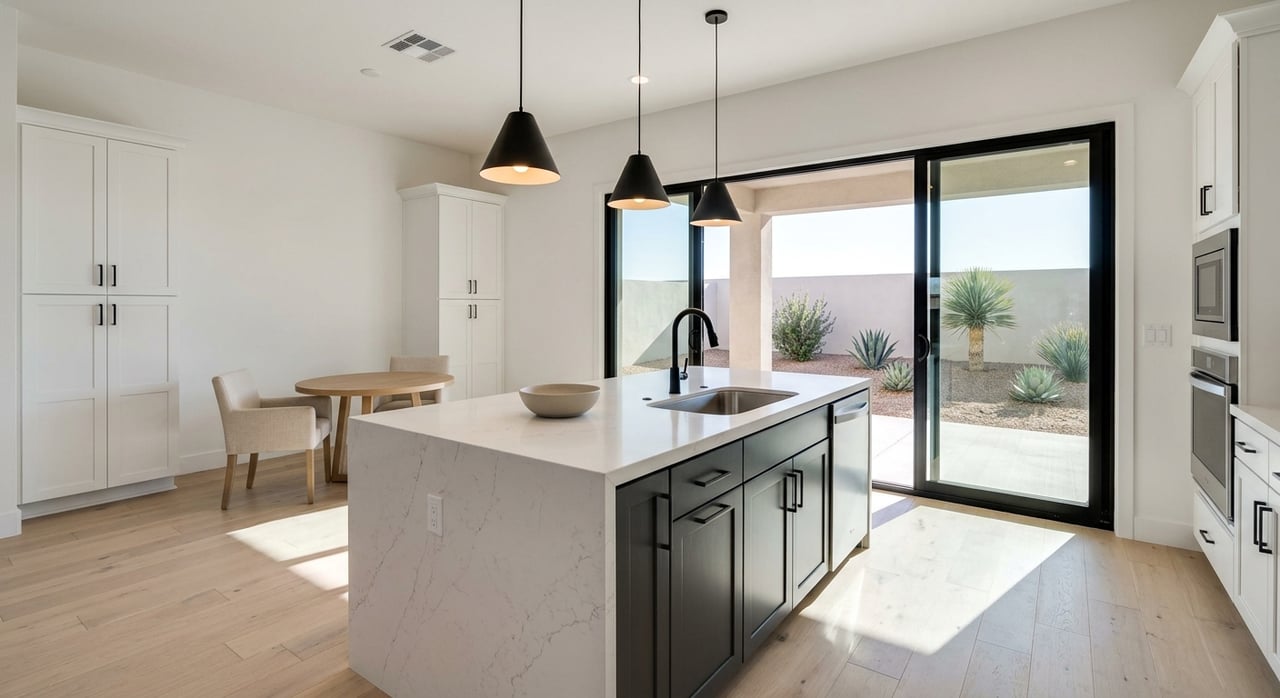
Thinking about investing in the High Desert? You are not alone. Many San Bernardino investors look north for a mix of relative affordability, growing housing options, and access to major commuting and logistics corridors. If you want to make smart decisions in Victorville, Hesperia, Apple Valley, or emerging new-construction areas like Silverwood, it helps to understand where the opportunities are and where extra caution matters most. Let’s dive in.
Why High Desert investing gets attention
The High Desert is not one single market. In San Bernardino County, the desert corridor is commonly understood to include places like Victorville, Hesperia, and Apple Valley, and each submarket behaves a little differently. County reporting shows 2024 population estimates of 140,721 in Victorville, 101,836 in Hesperia, and 75,029 in Apple Valley, with Victorville and Hesperia above their 2020 census counts while Apple Valley is slightly below. San Bernardino County regional reporting supports the idea that you should compare cities and neighborhoods individually instead of treating the whole High Desert the same.
Affordability is a major reason investors keep watching this part of the county. San Bernardino County’s Community Indicators dashboard reports a median existing single-family home price of $499,000 in Q4 2024 and $505,000 in January 2025. The same source says about 47% of county households could afford an entry-level home in Q4 2024, compared with 31% statewide, which helps explain why this region still attracts both buyers and renters.
What supports housing demand
High Desert demand is tied to more than home prices. Jobs, commuting patterns, and freight activity all affect how many people want to buy or rent in the area.
Hesperia’s official demographics page identifies transportation and warehousing, retail trade, and construction as key sectors. It also reports a 2025 labor force of 43,000, unemployment around 6.5%, and an I-15 traffic count of 134,000 drivers per day at Main Street in 2023.
Victorville also plays a major role in the regional economy. The city describes itself as the High Desert’s industrial hub, and its Southern California Logistics Airport is a 2,200-acre aviation center used by aerospace and logistics firms, according to Victorville economic development information referenced in local market context. For you as an investor, that means employment access and transportation infrastructure should be part of your screening process.
Property types to watch
New construction opportunities
New construction is one of the clearest stories in the High Desert right now, especially in Hesperia. A San Bernardino County report on the Silverwood project says the master-planned community will span 9,366 acres, include 15,633 housing units and 700,000 square feet of commercial space, with phase 1 under construction and about 2,000 homes.
For investors, that matters because master-planned growth can create a long runway of housing supply, commercial services, and neighborhood identity. It can also influence future resale demand if buyers continue to value newer homes, planned amenities, and a recognizable community setting.
If you are comparing builder inventory, early-phase opportunities, or nearby resale alternatives, it helps to have local guidance that goes beyond a model-home visit. That is especially true when lot premiums, floorplans, and future surrounding development may affect your long-term strategy.
Resale homes with established comps
Resales remain important because they often come with more immediate comparables and known neighborhood patterns. They are still relatively attainable compared with many other Southern California markets, but they are not inexpensive in absolute terms.
Census estimates place median owner-occupied home values at $385,600 in Victorville and $407,400 in Apple Valley, while Hesperia’s city-estimated median value is $479,770 according to its official demographics page. On top of that, county data shows home prices rose 144% from January 2015 to January 2025, so investors should be selective and focus on product, location, and exit strategy.
Land and lot plays
Land can look attractive on paper, but this is where High Desert investing gets more complex. A parcel is not automatically ready for development just because it is listed for sale.
San Bernardino County Land Development reviews issues such as drainage, grading plans, maps, and road and drainage improvements. County Special Districts development services may also be involved in water and sanitation availability letters, feasibility studies, annexations, water main extensions, fire-flow reviews, and sewer plan checks. In Hesperia, the city says its water supply comes entirely from groundwater in the Alto Sub-Basin of the Mojave River Watershed, which is another reminder that utility questions matter.
How to evaluate rental potential
Rental demand in the county is shaped by real affordability pressure. San Bernardino County’s Rental Affordability page says the Riverside-San Bernardino metro area’s 2026 housing wage for a median one-bedroom is $37.67 per hour, or about $78,360 annually. It also reports that 50.5% of renter households in San Bernardino County pay 35% or more of income on rent.
That does not guarantee every rental will perform well. It does mean that many households are feeling cost pressure, which can help support demand for rentals that are well-located, realistically priced, and properly maintained.
Census estimates in the same market context show median gross rent of $1,618 in Victorville and $1,444 in Apple Valley. When you compare properties, look at local rent levels, condition, commute access, and nearby employment patterns rather than relying on one broad county average.
How to evaluate resale potential
Appreciation history is important, but it should not be your only filter. San Bernardino County’s residential real estate market indicator reports that existing single-family home prices increased 10% from January 2024 to January 2025 and 144% over the prior decade.
That same source says housing permits fell 25% in 2024, from 7,315 to 5,458. This combination suggests a market with strong long-term appreciation, but not one where every property will move the same way.
A better approach is to look at:
- Recent comparable sales
- Price per square foot trends
- Days on market
- Property condition and upgrade level
- Distance to main commuting routes
- Proximity to stable employment areas
- Whether the property is in a city or unincorporated county area
A simple due diligence checklist
The High Desert rewards investors who ask detailed questions early. This is especially true for land, infill opportunities, and properties outside standard city utility areas.
Before you move forward, consider these screening questions drawn from county and district guidance:
- Is the property inside city limits or in unincorporated county territory?
- Are water, sewer, and fire-flow services already available?
- Does the parcel have legal access and utility easements?
- Will annexation or feasibility work be required?
- How close is the property to major employment and commuting corridors?
- Are there drainage, grading, or road improvement issues to solve?
These questions can affect holding costs, renovation plans, financing timelines, and resale liquidity.
Why timelines vary by deal type
Not every High Desert purchase moves on the same schedule. A finished resale usually follows a more familiar process, while raw land or build-focused deals often involve more agency coordination.
According to county land development guidance and Special Districts development services, land-related projects may require separate reviews for drainage, grading, mapping, roads, water, sewer, annexation, and fire flow. That does not mean every land deal will be slow, but it does mean you should plan for a different level of diligence than you would with a standard home purchase.
Where a local specialist adds value
In the High Desert, local knowledge is most useful when your decision depends on more than list price. If you are weighing new construction in Silverwood, comparing builder options, reviewing a resale for rental use, or trying to understand a lot’s development potential, you need clear, parcel-specific guidance.
That is where a hyper-local advisor can help you compare floorplans, lot tradeoffs, resale comps, and neighborhood-level trends while also pointing you toward the right public agencies for due diligence. For many investors, the goal is not just finding an opportunity. It is avoiding surprises that hurt the numbers later.
If you want help comparing new homes, resale properties, or land opportunities in Hesperia, Victorville, Apple Valley, or nearby High Desert markets, connect with Silverwood New Homes. You will get practical, local guidance designed to help you move forward with more confidence.
FAQs
What makes the High Desert attractive to San Bernardino investors?
- The High Desert offers relative affordability, active new construction, access to major commuting and logistics corridors, and a large buyer and renter base supported by county and city economic data.
What should investors know about Silverwood in Hesperia?
- Silverwood is a major master-planned community in Hesperia that county reporting says will include 15,633 housing units and 700,000 square feet of commercial space, making it an important area to watch for new-construction and nearby resale opportunities.
What rental factors matter most in Victorville, Hesperia, and Apple Valley?
- You should study local rents, housing cost pressure, job access, commute routes, property condition, and neighborhood-specific demand instead of relying only on countywide averages.
What due diligence matters most for High Desert land deals?
- Investors should confirm utility availability, legal access, easements, annexation needs, fire-flow requirements, drainage and grading issues, and whether the property is inside a city or in unincorporated county territory.
How are resale homes different from land investments in the High Desert?
- Resales usually offer clearer comps and more familiar transaction timelines, while land deals often require added review through county land development and water or sanitation agencies.
Why work with a local High Desert real estate specialist?
- A local specialist can help you compare builder options, resale values, lot tradeoffs, and parcel-specific concerns so you can make better-informed decisions in a market where subarea differences matter.