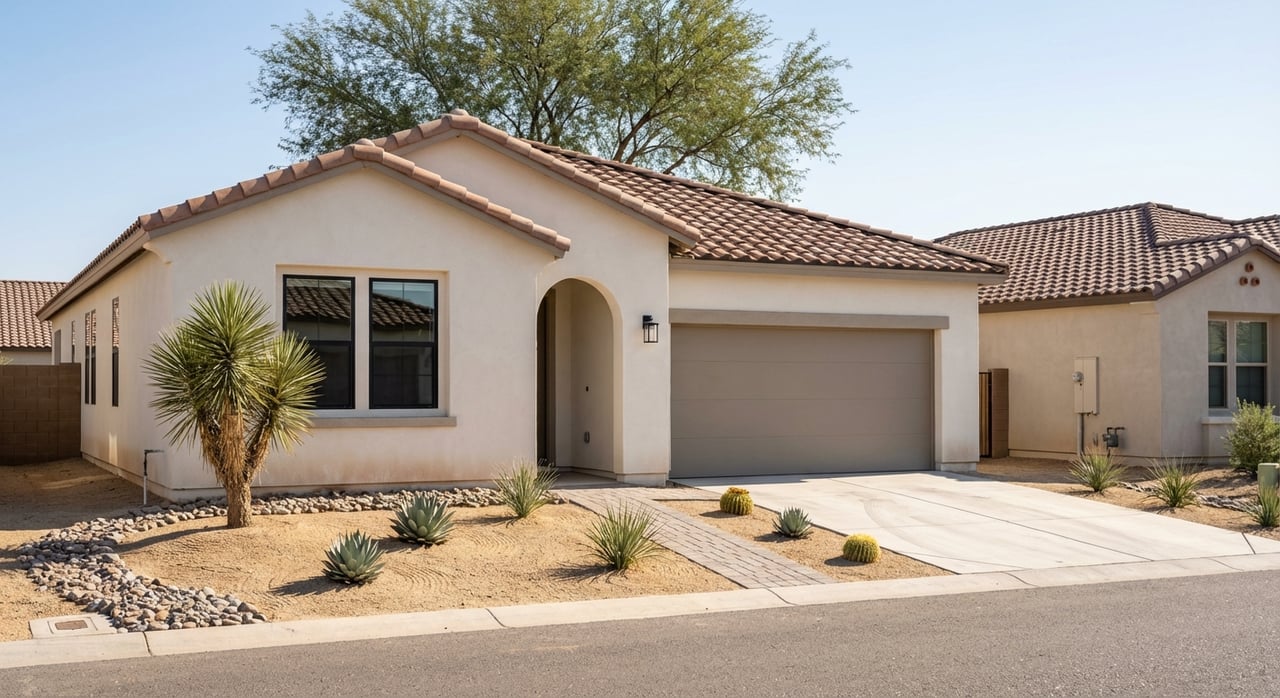
Thinking about a new construction home in Hesperia but not sure where to start? You’re not alone. With multiple builders, fast‑moving incentives, and a master plan reshaping the area, it can feel overwhelming to compare options. In this guide, you’ll learn how Hesperia’s new‑home market works today, where to find the most activity, what typical prices and lot sizes look like, and how to read incentives and timelines with confidence. Let’s dive in.
Hesperia market snapshot
New construction in Hesperia targets value‑minded buyers who want more space without the price tags seen closer to major job centers. Redfin reported a citywide median sale price around $470,000 as of December 2025. Median list prices for new homes often run higher than older resales because builders are aiming at first‑time and move‑up buyers with amenity packages and newer finishes. Always check the listing date when you compare price points, since inventory and promos change often.
For context, nearby cities have higher medians. Rancho Cucamonga was around $830,000 as of January 2026, while Ontario was about $655,000 in December 2025, and Fontana typically sits in the $620,000 to $650,000 range. That gap is one reason Hesperia is drawing strong buyer interest and significant new community investment.
Where new homes are building now
Silverwood leads the story
The largest driver in Hesperia is the Silverwood master‑planned community in Summit Valley. The master developer describes Silverwood as a multi‑phase plan entitled for tens of thousands of homes, with early phases already active and multiple builders selling. You can explore the scope through the Silverwood master plan by DMB Development.
National and regional builders launched model homes in 2024 and 2025 and opened to buyers in 2025. For an at‑a‑glance view of current plan types and “priced from” details, browse Lennar’s Silverwood collections and then cross‑check on your visit, since model availability shifts by phase.
Other pockets to watch
- Ranchero Estates. If a larger homesite is a priority, Ranchero Estates markets lots just under one‑half acre inside Hesperia city limits.
- Subareas within or near Silverwood. Neighborhoods like Grand Horizon, Cascade Landing, Painted Canyon, and others offer a range of single‑story and two‑story plans with clubhouse and trail access. You’ll find HOA‑supported amenities in some tracts. For example, a Grand Horizon listing shows an HOA in the mid‑$150s per month. See an HOA example around $150 to $160 per month and confirm the exact fee for the plan you choose.
What new homes cost in Hesperia
Most builders in Hesperia advertise starts in the low to mid $400,000s for smaller single‑story models. Larger floor plans and premium locations often land in the $500,000 to $650,000 band. Select larger lots or upgraded, move‑up products can reach the $700,000+ range depending on build stage and features. Use the builder’s current price sheet to confirm “priced from” numbers and any lot premiums that apply.
Floor plans and lot sizes to expect
In early Silverwood phases, many plans range from about 1,500 to 2,800+ square feet with 3 to 5 bedrooms. You’ll see single‑story and two‑story options, and some collections include flexible suites that work for multigenerational living. Most standard production homesites in the master‑planned area run roughly 5,000 to 7,000 square feet, which supports modern backyards without heavy maintenance. If you want more outdoor space, target communities such as Ranchero Estates for homesites near a half acre.
HOA, assessments, and monthly costs
Master‑planned neighborhoods with amenities typically include an HOA. In Silverwood’s early tracts, some listings show HOA dues in the $150 to $160 per month range that help fund shared amenities such as clubhouses, pools, parks, and trails. Always review the CC&Rs, budget, and reserve study for exact coverage and start dates.
In California master plans, a Community Facilities District special tax, often called Mello‑Roos, may also appear on the property tax bill. This is parcel specific and can affect your monthly budget. Ask for the estimated tax rate, the CFD disclosure, and a sample tax bill for the exact homesite you’re considering.
Incentives: how they work and what to watch
From 2024 through 2026, builders commonly offer temporary rate buydowns, closing‑cost credits, design‑center allowances, and price reductions on quick move‑ins. At Silverwood, some builders highlighted targeted promotions like a $5,000 “Heroes” credit in 2025 for eligible buyers such as veterans and first responders. See how this looked in practice in local coverage of the Silverwood Heroes incentive.
Two important tips:
- Many incentives require using the builder’s preferred lender or partner services. If you choose an outside lender, expect the incentive to shrink or change.
- Compare incentives by their real impact. A permanent rate reduction can yield larger lifetime savings, while a 2‑1 buydown eases the first 1 to 2 years. Ask the lender to show both the monthly payment and total cost over time for each option.
Timelines and build expectations
Production builders in the U.S. often complete homes in about 6 to 10 months from start to finish, with many analyses citing averages near 7 to 9 months in recent years. Factors such as weather, permitting, materials, and trade availability can extend timelines. Review the purchase contract for estimated completion and any remedies if the schedule slips. For broader context on completion trends, see this summary of national averages on single‑family build times.
Warranties and California right‑to‑repair
Most production builders provide a 1‑year workmanship, 2‑year systems, and 10‑year structural warranty pattern. Ask whether the structural coverage is backed by an independent insurer such as 2‑10 Home Buyers Warranty, which can add clarity for future resale.
California’s right‑to‑repair rules, often called SB 800 or Civil Code §§895–945.5, outline how construction defect claims and repair timelines work for new homes. Request the builder’s warranty booklet and repair procedures so you understand steps and response times. For background on how California approaches building and defect frameworks, see this policy explainer from UCLA Luskin’s research center that references SB 800 in context: Why we don’t build condos.
Read listings like a pro: a quick checklist
Use this checklist when you visit a sales center or compare online listings:
- “Priced from” vs actual out‑the‑door. Base prices exclude lot premiums, structural options, design upgrades, and standard closing costs. Ask for a fully itemized quote for your chosen homesite and plan.
- Lot premium and orientation. View, corner, and wider parcels usually carry premiums. Request a current homesite map and premium sheet for the exact parcel.
- Spec vs to‑be‑built. Spec or inventory homes can close sooner and often carry stronger incentives. To‑be‑built contracts offer more choice but add timeline risk.
- Incentive conditions in writing. Confirm whether preferred lender or title usage is required, what happens if closing dates shift, and any “must close by” deadlines.
- HOA specifics. Verify monthly dues, what they cover, start date, any master‑plan assessments, and community rules within the CC&Rs and budget.
- Special taxes and Mello‑Roos. Ask for the CFD disclosure and a sample property tax bill for the lot. This impacts your monthly carrying costs.
- Permits and infrastructure. In large master plans, confirm road, water, and sewer timing. San Bernardino County’s portal is a good reference for permit status.
- Hazard disclosures. Hesperia sits in the Mojave River watershed. Review FEMA flood maps and county resources, and see background reporting on Mojave River Dam considerations. Rely on official disclosures for parcel‑specific details.
- Warranties and repairs. Request the full warranty booklet, confirm whether structural coverage is insurer‑backed, and understand service request steps after move‑in.
- Bring your own buyer’s agent. Builder reps work for the builder. An independent local agent helps compare builders, parse incentives, and negotiate upgrades or credits.
How we can help
If you want a straightforward way to compare communities, plans, and incentives across Silverwood and greater Hesperia, you’re in the right place. We track phase releases, HOA details, and real‑time builder promos, then translate them into clear, apples‑to‑apples choices for your budget and timeline. When you are ready, we will walk the models with you, review contracts and disclosures, and help you secure the right lot at the right total cost.
Ready to explore new construction in Hesperia with a local advocate? Schedule a consultation with Silverwood New Homes.
FAQs
What price range should I expect for a new home in Hesperia?
- Recent builder “starts” often land in the low to mid $400,000s, with many popular plans between $500,000 and $650,000 and select larger or premium lots reaching $700,000+.
Where is most new construction happening in Hesperia right now?
- Silverwood in Summit Valley is the major hub, with multiple national and regional builders active and early phases open since 2025.
How much are HOAs in Hesperia’s master‑planned neighborhoods?
- Many amenity neighborhoods in Silverwood show example HOA fees in the $150 to $160 per month range, but you should confirm the exact amount for your tract and plan.
How long does a new build usually take from contract to move‑in?
- Production timelines commonly run 6 to 10 months depending on phase, permitting, weather, and materials, with many analyses citing 7 to 9 months as typical.
Do builders in Hesperia offer incentives, and what’s the catch?
- Yes, common incentives include rate buydowns, closing credits, and design upgrades, and many require you to use the builder’s preferred lender to access the full benefit.